Sunday, May 23, 2010

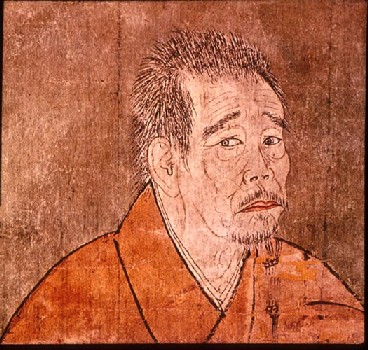
Is *this* what Buddhism is about?

Vincent Horn quotes Roger Walsh as saying...

So, we are at this enormously pivotal time in human history where we desperately need what Buddhism and other contemplative practices have to offer us. And we are called as individuals and as a spiritual community to develop the skillful means that makes optimal use of contemporary technology and information to respond as well as we can both individually and collectively to these crises.

I can agree with that. 

But must Buddhism be culturally relevant? Must Buddhism be "cutting edge?" Must Buddhism "adapt to the West?"

No, not at all. It neither excludes nor includes the trendy and the mass produced.  In a world where Buddhas can be had for money at Wal-Mart,  where one can practice non-attachment at Burger King, why should anyone think one should be "special" for practicing Buddhism.

None of this is what I think, what you think, what Roger Walsh thinks, or anyone else.  And the opposite is true, as well.

I am not a Buddhist because of the Dalai Lama, nor because of Steve Jobs (I didn't know he was a Buddhist).  I am not a Buddhist because it's trendy, but rather because I can help myself and others with this path.   In a certain sense I think it's important to extrapolate something Thomas Merton wrote somewhere; my extrapolation is: I think it's useful to be somewhat irrelevant, because that indicates a certain degree of non-attachment. 

Saturday, May 22, 2010

Quantum Physics and the Dalai Lama? Or, Science and Buddhism: the Real Deal

I thought of this post last night as I was reading this entry on the Tricycle blog about the Dalai Lama, who was either misrepresenting what some physicists were telling him (I would assume unintentionally) or some physicists were being rather patronizing to him.   To wit:


Another very interesting part of today’s teaching was the discussion of Buddhism’s relationship to quantum physics.  His Holiness spoke of his conversations with highly intelligent western quantum physicists in which the striking similarities between Buddhist teachings and this fascinating field of science were touched on. Just like Nagarjuna describes in his text, these quantum physicists attest that when their work takes them very far into observation of matter and existence, they eventually get to a point where they can no longer prove anything exists at all! Obviously, the fact Buddhists are able to cite an ancient Buddhist text that says essentially the exact same thing as this cutting edge field of western scientific inquiry is quite impressive to the physicists.
Still, the Dalai Lama pointed one very important difference between Buddhism and quantum physics.  With science, one only looks at the external world and therefore what is gained is a massive amount knowledge. With Dharma practice, one applies the same investigative methods to the internal world of personal experience and what is gained is more than just knowledge; one gains a deeper type of understanding altogether. It is the type of understanding that helps one achieve happiness and act with true compassion. It is the type of understanding that gives one the ability to liberate oneself and others from suffering.

 Now, if you have a good background in probability, differential equations, statistics, stochastic processes, and signal processing, the elements of quantum physics, uh....aren't all that hard to understand.  Unfortunately, I realize that my training isn't your training, but all I'm basically saying is that it's a good thing in itself to have enough mathematical background to do this kind of work, which is roughly at the sophomore or first semester junior levels of engineering, physics or math majors.  While I can prove the Central Limit Theorem 5 ways till Sunday, you actually don't need the ridiculously specialized studies I've done to get a grasp of what quantum theory is.  It just sounds difficult.

That's what made me cringe about the above writing.  Quantum physicists aren't out to prove that anything or nothing exists. That's a job for metaphysicists, not physicists.  So I'm intrigued by how the above got that way.  While it's true that Nagarjuna teaches dependent origination, and quantum physics concerns the coupling or dependency of states of matter with its environment, they rightly belong to different spheres.  Science, like engineering, is actually based on a phenomenological outlook rather than from "grand view" of philosophy.  We observe, make tentative guesses or assumptions, and then create tests to observe if those guesses conform to further observation.

While to some extent this is a Buddhist practice as well, there are some serious differences between that arrived at through the Scientific Method and the speculations of Nagarjuna.  I lean towards acceptance of Nagarjuna's work because it conforms to observation, but Nagarjuna's work is blissfully unaware and stands wholly apart from an attempt to subject itself to observation, and the idea that Nagarjuna's work could be verified or not based on observation, would no doubt have been anathema to Nagarjuna, who would no doubt declare that science itself has no essence, that the scientific method is empty, and so forth.  In this way, actually Nagarjuna is actually much closer to the Deconstructionists such as Derrida than the quantum physicists, as anyone who spends an hour in the bathroom reading the linked book will tell you (assuming, that they've spent weeks or months going over Nagarjuna's Mūlamadhyamakakārikā.

Finally that last link - between the Mūlamadhyamakakārikā and the work of Derrida - brings to mind this famous work by Alan D. Sokal, published in Social Text. Sokal, wanted to highlight the "emptiness" of literary theory based on postmodernism, and managed to get his hoax "postmodern physics" paper published by the aforementioned journal.   It seems to me that it would be very easy to execute a Quantum Tibetan Buddhist Physics hoax, especially since there have been such works already published by those who didn't get the science of physics. So that leads me to the following questions: Were the quantum physicists pulling the Dalai Lama's leg?  Was the Dalai Lama hearing what he wanted to hear?  Were the physicists too enchanted with the avuncular Dalai Lama to want to sugar-coat what they were doing in their explanations to him? Because as a guy who understands the Heisenberg Uncertainty Principle (position and momentum are Fourier Transform pairs) I have no better explanations.

Finally, Barbara's Buddhism blog today has a post on a recent article in the Guardian, about someone complaining about psychological research being supported by or in collaboration with by the Dalai Lama.


At a time when the relationship between science and spirit seems characterised by mutual suspicion, common ground for enquiry is all the more refreshing. Like at last Sunday's opening of the University of Wisconsin's centre for investigating healthy minds, where the Dalai Lama shared a platform with the new centre's director, Professor Richard Davidson.
The department is a hub of expertise in what is being called "contemplative neuroscience", and a natural extension of Davidson's ongoing quest to discover how various forms of meditation impact the brain. Among his discoveries so far: learning mindfulness skills is associated with greater, sustained activation in parts of the brain linked to happiness and resilience, practising loving-kindness contemplation increases production of gamma waves and affects areas related to empathy, and concentration meditation increases activity in regions linked to control of attention and decision-making. He has also found that the effects of these practices tend to be more marked in people who have been doing them for many years, suggesting that we can train our minds towards wellbeing in the same way as physical exercise can help us develop a healthier body.
Davidson's association with the Dalai Lama stretches back to 1992, when, having heard of his research, the Tibetan leader encouraged him to make a scientific study of traditional Buddhist practices.


As I noted in a comment on Barbara's blog, the science will either be good science or it will not be, so whether the Dalai Lama supports it or collaborates with it to me is a non-issue.  He may not like the results that emerge, but that's his problem.   To me, though the issue though is the misunderstanding of science by non-scientists.  It behooves all to try to better learn this area, simply because scientists are saying important things about the world in which we live, and the best of science is done without selfish reasons or psychological motives, and stands on its own.  And Buddhists can learn from science that lack of selfishness as well.

Friday, May 21, 2010

Odd ads Google is giving me...


In addition to the ads in the corner above, I've had ads for the "Southlake Foursquare church," and "Church! at bethany.

Hey if you want to click on 'em go ahead; I have no problem accepting money from fundamentalist churches.  I plan to donate 1/2 my revenues to a good Buddhist charity or my temple.  Not that I've had any revenues yet, but that's my plan.

“The first self-replicating species we’ve had on the planet whose parent is a computer.”

So evidently we can, in principle, make living beings using computers instead of the old fashioned way.

The genome pioneer J. Craig Venter has taken another step in his quest to create synthetic life, by synthesizing an entire bacterial genome and using it to take over a cell. 

Dr. Venter calls the result a “synthetic cell” and is presenting the research as a landmark achievement that will open the way to creating useful microbes from scratch to make products like vaccines and biofuels. At a press conference Thursday, Dr. Venter described the converted cell as “the first self-replicating species we’ve had on the planet whose parent is a computer.”
“This is a philosophical advance as much as a technical advance,” he said, suggesting that the “synthetic cell” raised new questions about the nature of life
Other scientists agree that he has achieved a technical feat in synthesizing the largest piece of DNA so far — a million units in length — and in making it accurate enough to substitute for the cell’s own DNA.
But some regard this approach as unpromising because it will take years to design new organisms, and meanwhile progress toward making biofuels is already being achieved with conventional genetic engineering approaches in which existing organisms are modified a few genes at a time.
Dr. Venter’s aim is to achieve total control over a bacterium’s genome, first by synthesizing its DNA in a laboratory and then by designing a new genome stripped of many natural functions and equipped with new genes that govern production of useful chemicals. 

 Naturally this calls into question what divides life and non-life, which, for Buddhists of the Mahayana variety, isn't so bad because of our non-dualism.  But this is reason number N, that I'm glad I'm not a monotheist.

Thursday, May 20, 2010

Yeah, I can't help think "My religion's better than yours"

And so there's so little merit in this post perhaps you should just skip it, unless perhaps, you're an evangelical who inadvertently happened to get to this blog by some quirky twist of fate.   Regardless, P.Z. Myers today brings to my attention a survey of conservative Evangelical pastors whose results are nothing less than shocking.  From the original link...

  • Of the one thousand fifty (1,050 or 100%) pastors we surveyed, every one of them had a close associate or seminary buddy who had left the ministry because of burnout, conflict in their church, or from a moral failure.
  • Nine hundred forty-eight (948 or 90%) of pastors stated they are frequently fatigued, and worn out on a weekly and even daily basis (did not say burned out).
  • Nine hundred thirty-five, (935 or 89%) of the pastors we surveyed also considered leaving the ministry at one time. Five hundred ninety, (590 or 57%) said they would leave if they had a better place to go—including secular work.
  • Eighty- one percent (81%) of the pastors said there was no regular discipleship program or effective effort of mentoring their people or teaching them to deepen their Christian formation at their church (remember these are the Reformed and Evangelical—not the mainline pastors!). (This is Key)
  • Eight hundred eight (808 or 77%) of the pastors we surveyed felt they did not have a good marriage!
  • Seven hundred ninety (790 or 75%) of the pastors we surveyed felt they were unqualified and/or poorly trained by their seminaries to lead and manage the church or to counsel others. This left them disheartened in their ability to pastor.
  • Seven hundred fifty-six (756 or 72%) of the pastors we surveyed stated that they only studied the Bible when they were preparing for sermons or lessons. This left only 38% who read the Bible for devotions and personal study.
  • Eight hundred two (802 or 71%) of pastors stated they were burned out, and they battle depression beyond fatigue on a weekly and even a daily basis.
  • Three hundred ninety-nine (399 or 38%) of pastors said they were divorced or currently in a divorce process.
  • Three hundred fifteen (315 or 30%) said they had either been in an ongoing affair or a one-time sexual encounter with a parishioner.
  • Two hundred seventy (270 or 26%) of pastors said they regularly had personal devotions and felt they were adequately fed spirituality. (This is Key).
  • Two hundred forty-one (241 or 23%) of the pastors we surveyed said they felt happy and content on a regular basis with who they are in Christ, in their church, and in their home!
  • Of the pastors surveyed, they stated that a mean (average) of only 25% of their church’s membership attended a Bible Study or small group at least twice a month. The range was 11% to a max of 40%, a median (the center figure of the table) of 18% and a mode (most frequent number) of 20%. This means over 75% of the people who are at a “good” evangelical church do not go to a Bible Study or small group (that is not just a book or curriculum study, but where the Bible is opened and read, as well as studied), (This is Key). (I suspect these numbers are actually lower in most evangelical and Reformed churches because the pastors that come to conferences tend to be more interested in the teaching and care of their flock than those who usually do not attend.)
Here is research that we distilled from Barna, Focus on the Family, and Fuller Seminary, all of which backed up our findings, and additional information from reviewing others’ research:
  • Fifteen hundred pastors leave the ministry each month due to moral failure, spiritual burnout, or contention in their churches.
  • Fifty percent of pastors' marriages will end in divorce.
  • Eighty percent of pastors feel unqualified and discouraged in their role as pastor.
  • Fifty percent of pastors are so discouraged that they would leave the ministry if they could, but have no other way of making a living.
  • Eighty percent of seminary and Bible school graduates who enter the ministry will leave the ministry within the first five years.
  • Seventy percent of pastors constantly fight depression.
  • Almost forty percent polled said they have had an extra-marital affair since beginning their ministry.
  • Seventy percent said the only time they spend studying the Word is when they are preparing their sermons (This is Key). 


Now, to be honest, I really did not think, "My religion's better than yours" per se; I did think, "Geez, I would love to do a study on Buddhist teachers and practitioners; I bet  we generally would score better."

And I think that would be true.  I would think the "Read the bible as a magic formula to banish the blues" almost certainly does nothing once its placebo effect wears off, whereas we do have some tools in our arsenal that have been clinically tested.  But to be honest, I also feel for these people, who are caught in a hell of a cognitive dissonance.

Jeff Bridges and Bernie Glassman and Genpo Merzel and Ken Wilber and...

I think it's a good idea that one should follow Buddhism despite the celebrity endorsements.  Still I'd rather have Jeff Bridges on the Zen side, I suppose, than Richard Gere.

I find it interesting to me that a lot of the Zen folk today identify with the Jeff Bridges from "The Big Lebowski," when there's a host of better Bridges films, including, but not limited to "Arlington Road," "Blown Away," "The Morning After," and one of my personal favorites, "The Fisher King."  It's also odd to me that some people find the Lebowski character to be "Zen," when I find it to be "stoner."

That said, I think Bridges is a great actor, and it puzzles me that he got to know and befriend Glassman; I guess that's what having the energy and time to set up charities can do. (As a colleague reminds me, though, are such things really charities if there is a business benefit one accrues from them? Ah, that's a subject for political philosophy.)  And my parenthesized words notwithstanding, I think charities are necessary in the world in which we live and I applaud Glassman for the work he does (see the video hyperlinked in the first paragraph).  I don't think by implication that because you can trivially find photos of Glassman with Ken Wilber (and probably with Genpo Merzel that Bridges is putting his imprimatur (to the extent that he has one?) on Wilber, Merzel, et al.  But then again, one should follow a path regardless of those who declare themselves to be fellow-travelers, despite the avowed fellow-travelers' skill, sincerity, or success in execution.  I have found some of Glassman's work (particularly "Instructions to the Cook") to be of particular use, although I would say you could get most of what Glassman writes about in that book from reading Dogen himself. I do not find that "Big Mind" schtick to be useful from a Buddhist perspective, though I do know that others think so. 

Please consider Buddhism as not being because or about celebrity Buddhists. 

Dalai Lama's Point Man: Fitting to be in the Fashion & Style Sections

Even I have heard that the Dalai Lama is coming to town, er, New York City.  The NY Times on line (and presumably its paper incarnation too), has a story on one Nicholas Vreeland, grandson of Diana Vreeland, some fashion glitterati woman of the 70s and 80s.  Besides being a scion of glitterati, Vreeland  is also a Tibetan Buddhist monk.


Well, good for him, as one of my son's classmates is wont to say, albeit with a note of sarcasm.

No, seriously, good for him.  I would say being a Buddhist monk of the Tibetan variety is far more useful for society than fashion, except when it comes to procreation, and in that department I will cede the argument to fashion (unless it's a Dharma burger?).   But its clear that from the observation point of the NY Times reporter, fashion and "Buddhism" share much in common  at least in its Dalai Lama as pop star variety.


No detail is too frivolous. Mr. Vreeland stopped in at ABC Carpet and Home recently to choose an armchair for the Dalai Lama to sit in on the stage of Radio City; he likes to sit cross-legged. “I went through the whole collection of sofas and chairs to choose the appropriate chair for His Holiness,” Mr. Vreeland said, adding that the chair will be on loan.
At Radio City Music Hall, the Dalai Lama will speak for the first three days about two Buddhist texts that teach the concept of emptiness and the way to enlightenment. For this, he will sit on his Tibetan throne. On the fourth day, he will hold a public talk about how to lead a life of happiness. (That’s when the chair will be put to use.)
The crowd undoubtedly will veer from robe-sporting Buddhists to Fendi-carrying, Louboutin-wearing devotees, the two groups holding two things in common: a passion for Buddhism and their trim waistlines.

Perhaps what the NY Times reporter takes to be the money Buddhist quote from Vreeland is this:


“People who cause you difficulties, you should think of them as very, very valuable teachers because they provide us with the opportunity to develop patience.”


Now I would say this is incomplete, from a Zen perspective: "People who cause you difficulties" is quite a bit dualistic, and "they provide us with the opportunity to develop patience" sounds like you're hoping to get something for your "suffering."  

I would say you "get" the "opportunity" to be in that place, but the minute you think "get" and "opportunity" you're in a different place entirely.  Maybe Vreeland would agree and say I'm saying the medium, and the medium is the message, and he's just using skillful means. I dunno. I do know if somebody gave me, when I'm getting seriously hassled that I'm getting the "opportunity to develop patience," I'd say that person was availing himself of an opportunity to engage in a form of spiritual materialism (and perhaps I'm doing the same thing with this post).   Rather than pose the whole affair as a cost-benefit relationship, at least with this practitioner at any rate, I think it's more helpful to promote the skill of dealing with such circumstances.

That said, I hope Mr. Vreeland  has a good time with the Dalai Lama and I hope he likes his chair.  And I hope someone holds the DL to actually practice compassion in dealing with people who are non-Tibetan Chinese.

Wednesday, May 19, 2010

Lankavatara Sutra Chapter 3, Section LXVIII

As usual, I'm using this translation, and of course nobody authorized me to say anything.  Take my words at your own risk.

This section is about, "the characteristics of our deep attachment to existence and of our detachment from it" so as to "behave ourselves with effortlessness like the moon, the sun, the jewel, and the elements" to enter the "stage and abode of Buddhahood" so as to free all beings "from the dualistic notion of being and non-being," birth and destruction, to "establish ourselves where there is a revulsion at the deepest recesses [of our consciousness], which is more than words [can express]."

The Buddha replies that there are numerous attachments

to signs of individuality, to causation, to the notion of being and non-being, to the discrimination of birth and no-birth, to the discrimination of cessation and no-cessation, to the discrimination of vehicle and no-vehicle, of Samskrita and Asamskrita, of the characteristics of the stages and no-stages, and the attachment to discrimination itself, and to that arising from enlightenment, the attachment to the discrimination of being and non-being on which the philosophers are so dependent, and the attachment to the triple vehicle and the one vehicle, which are discriminated.

 And there are those (of us? including us?) that seek to wrap others as well as themselves in attachments like silkworms wrapping a thread which charms them.

Further, Mahamati, there are three attachments deep-seated in the minds of the ignorant and simple-minded. They are greed, anger, and folly; and thus there is desire which is procreative and is accompanied by joy and greed; closely attached to this there takes place a succession of births in the [five] paths. Thus there are the five paths of existence for all beings who are found closely attached [to greed, anger, and folly]. When one is cut off from this attachment,  no signs will be seen indicative of attachment or of non-attachment....

Further, Mahamati, depending upon and attaching to the triple combination which works in unison, there is the continuation of the Vijnanas incessantly functioning; and because of the attachment there is a continued and deep-felt assertion of existence. When the triple combination which causes the functioning of the Vijnanas no more takes place, there is the triple emancipation, and when this is kept in view, there is no rising of any combination. So it is said:
The imagining of things not existent—this is characteristic of attachment [deeply seated in all beings]; when the truth of this is thoroughly understood, the net of attachment is cleared away.

 The "five paths" referred to here may mean existences among the realms of the gods, the Asuras, mankind, the animals, hungry ghosts, and Yama's abode, which can be taken to mean all possible realms of existence, as this layman reads it.

Tuesday, May 18, 2010

Handling the "heretics"

The Zennist caught Sam Harris outBarbara O'Brien seems to have fumbled the meaning of Buddha-nature. Compare and contrast this bit from the Lankavatara Sutra I recently blogged on with what she says in her post to which I've linked.

You can also read the references of the Wikipedia article on Buddha nature.

But, so what?

Ultimately, what matters is whether or not folks are helping people or hurting people. If you cannot help them, if you can not bring them on to a vehicle that goes to a good place, who is the heretic? Who is sincere?

I mean, how are you going to live with people?

Monday, May 17, 2010

Where do you buy zazen supplies and what do you buy?

About once per year I buy incense and candles.  I used to pick up the former in Japan given the opportunity, and the candles I would purchase at the Portland Saturday Market.  However, that grew unreliable with time,  and now I buy them from here.  The folks at Beeswax Candle Works make a wonderful product.

Nowadays, regarding incense, I purchase pretty much exclusively from japanincense.com.  As my practice is a Zen practice, they pretty much have the right stuff. Now I must admit in terms of incense, my purchase choices do betray some of the worse stereotypes about American Buddhist practitioners.  Then again, I'm sure the lion's share of the market for these incenses exists in Japan, so although I use "not cheap" incense, I don't use way out of line stratospherically expensive incense.  I use:
  • Baiedo Byakudan (Sandalwood) Kobunboku The website "Olfactory Rescue Service" (yes, an incense review blog; I thought I mentioned them once) says of this incense in one of its "Best of the month" series, " Easily one of the best deals in Sandalwood on the market. Nice spice and camphor top notes with a really high quality wood which holds down the finish. If you are looking for Sandalwood be sure to check this one out, it’s a big favorite around here. A slightly dryer alternative might be Shunkodo’s Sarasoju or for the wetter side the Fu-In Sandalwood." And I agree with them regarding the latter.
  •  Minorien Fu-In Sandalwood is a wonderful pure beautiful sandalwood scent. It does have a "wet" scent though.  One whiff of this stuff will transport you to a temple you've never known, somewhere in Thailand or Burma...In addition...
  • Minorien Fu-In Aloeswood and Fu-In Kyara. These are pretty much as their reviews on the Olfactory Rescue Service state.
  • Minorien Kyara Ryugen, for extra special occasions.  It is as they say here, a nice pointer to how really beautiful Kyara scents are, without being absurdly expensive.  You can spend a lot more money on incense than this admittedly expensive product.  I don't use this stuff often.
  • Nippon Kodo Mainichi Koh.  It's reviewed here. Monasteries in the US often use this brand; it is the least assuming of incenses. I am going to be purchasing this brand because I do find the Baiedo, which I'd been using, to be pretty strong in the space of my zendo.

So that's it.  I do wonder if anyone else who reads this buys similar products, and what they buy.

Sunday, May 16, 2010

Who comes along on your vehicle?

A vehicle gets you places.  Can you bring people resenting you along?  The Lankavatara Sutra states, "The recognition of the one vehicle is obtained when there is no rising of discrimination by doing away with the notion of grasped and grasping and by abiding in the reality of suchness (yathabhuta)."

Where do you take others? How do you take them?

 Faisal Shahzad had a vehicle, as we know, but he had another vehicle whereby he was taking people on the journey of his life.  He, like myself, like the Christians, had a religiously informed vehicle.  Could we have kept him from his vehicle?  Many of us, of course, spoke against the Bush regime, and we cannot hold anyone but Shahzad accountable for Shahzad's actions.  
Do we have a Faisal Shahzad in our life to whom we can reach out? As I read the story in the NY Times to which I've linked, I can't help but get the feeling that this was one non-self aware guy, who was not getting peace from his religious practice, from others, from himself.  He was not actively seeking to make peace, and it seems, at least from the Greek chorus of acquaintances and others in the article, that no one was actively seeking to help him be at peace. 

Naturally Mr. Shahzad's case is but a microcosm of a huge bomb of hatred and violence constructed by certain people - Muslims and non-Muslims.  How to disarm?  Well, there's people in your immediate circle of acquaintances. Are they on your vehicle?  Are you bringing them along with you to a good place?

Am I making sense?


Saturday, May 15, 2010

Although it's not about people dying it IS about academic freedom...

P.Z. Myers has a must read post today, on what might happen when researchers talk about published peer-reviewed research on bat fellatio, and its possible relation to human behavior.

There's a petition to sign.  It's about academic freedom.

Enlightenment? And, I can have sympathy for the Dalai Lama

In looking at the variety of responses to Barbara O'Brien's question, "What would you ask the Dalai Lama?" I'm struck by the basic, uh, lack of familiarity with Buddhism of some of the responses.

That may or may not be due to the fact that like Deepak Chopra, the Dalai Lama does make for image media...


Anyway...some of the more interesting responses to Barbara's question asking for questions to ask the Dalai Lama...


Why some people reincarnate as homosexuals or transexuals?

Is he a Buddha?

What in his words is enlightenment ?

What the practices we should do if we want to meet and learn more from Dalai Lama in every single life?


It's clear to me that there's people out there that pretty darn near deify this man. There's others that think he's a good man (nothing wrong with that, my remarks about the two-hand clap of himself and the Chinese notwithstanding), but would benefit from more understanding of Buddhism.

That's OK.

I hope though that all those folks who may be hoping, consciously or not, to get a grasp of enlightenment from the Dalai Lama, or who might be a Buddha, or whether or not they're reincarnated, can at least live where they are, finding themselves where they are.  That's the main thing, to paraphrase Dogen, that Soto  and non-Rinzai guy.

I also feel for the Dalai Lama. I think he has to deal with many people confused about the whole situation about their existence here, and they're asking him to give them "the" answer. So he's in kind of a predicament; and it's not an easy one for him. He's got the political situation to deal with, a subset of the Tibetan population (maybe a large one) that is very opposed to the current political system in Tibet, and he's got the Tibetan Buddhist mandate as Avolokitesvara to maintain. They expect him to be the living, talking, joking, avuncular, happy Buddha and a "good" political leader. It's difficult. Especially the latter part, although he needs to improve on this very much, to say the least. But the followers do remind me of this (obligatory Monty Python reference):


Friday, May 14, 2010

The experience versus the hype...

Kyle, congrats on the marriage again...but...I didn't find your post here confusing at all, but there is the possibility that I've entirely misunderstood it.

It does remind me, regardless of my experiences.  As I reflect on the past week, I realize that a couple of "big questions" got answered in my own mind this week. I also observed a rather ordinary week in which I appreciated my eight year old son - holy crap! - he's eight already. I once cradled him in my arms.

And I think about that.  

One's awareness, one's experience, consciousness is very precious.  Your attention is the most precious thing you can give another person, it is the most genuine gift.  But in order to give it you've got to be in harmony with that person and with yourself. 

Thing is, though, the way to do that right now is to get that there's nothing fundamentally wrong with you or them.  Things are exactly as they should be. There is no "shadow" to dispel.


Thursday, May 13, 2010

Lewis Black on Glenn Beck

If you haven't seen this, it's worth a few minutes of your life, if you have any exposure to right-wing US television...

www.thedailyshow.com
Daily Show Full EpisodesPolitical HumorTea Party

Barbara of the Buddhist Blog May Get to Ask the Dalai Lama a Question!

Her post explaining this is here. I've got a host of blog posts about Tibet, which ought to raise enough questions.

My question to her would hinge on this post however:

The man born as Gyancain Norbu was chosen by the Chinese government years ago as an emanation of Amitabha, the so-called Panchen Lama.  Given that there are serious practicing Buddhist clergy in China - any visitor can meet them - and given that the man born as Gyancain Norbu has dedicated his life - literally, as much as you have - to reconciling Tibetan Buddhism with political realities - does HH expect other observers to believe that the Chinese government is trying to "deliberately annihilate Buddhism" as he was recently quoted as saying?  And how can you show compassion for Gyancain Norbu?


I never quite did get an answer to the first question when I e-mailed it in at the Dalai Lama website.

Update:  Looking at the questions posed at Barbara's blog, I'm amazed a bit at the woo-ism that passes for Dalai Lama worship.   It amazes me that the leader of a movement that is nondualist in nature is good at amassing a following of people seeing these things as dualistic.  I understand it though: the Dalai Lama must be, as well as a Buddhist leader a political leader, and for that he cultivates a certain persona. It's just personas aren't people.

Wednesday, May 12, 2010

Ways of Seeing the Buddha...

In the book (and presumably TV series) "Ways of Seeing," John Berger presented a very cogent way to view art.  He made the rather obvious (in retrospect) point that much of the classical art we see had a larger purpose behind it.  That purpose was intentionally propagated by those who funded the work.  This is clearly true from all works we see around us, from the Jesuit Churches (to my knowledge, generally built according to a plan) to the pyramids, to portraits of nudes, to Gaugin's work, and so forth.  This trend extends all they way into modern advertising.  Yes, there is a similar ethos in play in the famous Snicker's commercial (and its parody in Family Guy) and the Sistine Chapel.

This also holds with images of the Buddha and the Bodhisattvas.  These images were crafted to convey various aspects of the Buddha, and these aspects are present in the images.  Often these images and statues were commissioned by the elite classes, but I would hardly generalize them all as propaganda falsities, just as I would not characterize the Jesuit churches or St. Peter's that way either.  They are the works of true believers.  With that in mind, I'd like to present some images of Buddhas, Bodhisattvas, and Buddhist teachers and historical figures.

What do you see?  How do the visages of the modern pictures compare with those of the ancients? I will submit that the one of Ven. Warner is more candid than the others, and I've left out quite a few others that are "popular," but this collection says something rather direct to me. (HT: ~c4chaos for the link to Adyashanti.)


Tuesday, May 11, 2010

More on my bad Zen management style

Phillip Kapleau relates a story of Ikkyu Sojun illustrating the importance of bare attention in all affairs:

One day a man of the people said to the Zen master Ikkyu: “Master,will you please write for me some maxims of the highest wisdom?”
Ikkyu immediately took his brush and wrote the word “Attention ( 念).”
“Is that all?” asked the man. “Will you not add something more?”
Ikkyu then wrote twice running: “Attention. Attention.”
“Well,” remarked the man rather irritably, “I really don’t see much depth or subtlety in what you have just written.”
Then Ikkyu wrote the same word three times running: “Attention. Attention. Attention.”
Half angered, the man declared: “What does that word attention mean anyway?”
And Ikkyu answered, gently: “Attention means attention.”

I don't know if Kapleau's quoting of "Mondo Zenso (Dialogues of the Zen Masters)" is accurate or even if this quote is not apocryphal.  Doesn't really matter to my larger point. I'd mentioned about "Paying attention" the other day in terms of working with the folks on my project.

This bit of Ikkyu seems particularly apt.  Google it and you'll find it repeated all over the internet, including but not limited to a Psych 101 text that recommends this mental stance for "dishabituation." I couldn't have said it better myself.  If you don't know the benefits of dishabituation in today's business world, well, I guess you're not in that world.

Although I don't want to be accused of not walking the walk, I'm willing to take the risk and point out that in meetings with staff, peers, and managers, there is simply no substitute for "Meeting Zen."  Ikkyu, of course was a "Monk that [had] broken the precepts for eighty years," and no doubt today would not be viewed favorably by the American Zen community, perhaps by this writer (though of course my vanity hopes otherwise).  But he does make Brad Warner and that Noah Levine look rather pale, I'm afraid.

But from whom would you rather take advice? The guy who wrote "Who moved my cheese?" (Forward by Kenneth Blanchard) .  Or a guy who, despite his imbibing, and precept breaking was still considered one of the best of Japan's Zen Masters because of his iconoclasm?

Or should I just say, just try "Meeting Zen," and if you don't like it, I'll refund you nothing?

Monday, May 10, 2010

Lankavatara Sutra Chapter 3, Section LXVII

Yes, I'm using this translation, and of course nobody authorized me to say anything.  Take my words at your own risk.

...All differentiation in transformation is to be regarded as due to discrimination, such as the thickening of milk into curds and the ripening of fruit into a liquor...
...[R]eally there is nothing transformed, for the external objects of which being and non-being are discriminated, are what is seen of Mind itself and have no reality of their own. In the same way, Mahamati, what is regarded by the ignorant and simple-minded as the evolving of objects is no more than the discrimination of their own mind, and,  Mahamati, there is really nothing evolving, nothing disappearing, as it is like seeing things that evolve in a vision and a dream. Mahamati, it is like perceiving the rise and disappearance of things in a dream; it is like the birth and death of a barren woman's child.

That about says it all, as I read it.

It's good to be reminded of such things when it's one of those days where you wake up on the wrong side of the bed, but aren't quite aware of it until about 20 minutes into your day. Or other days...

Sunday, May 09, 2010

Far and away the most popular blog entry I ever wrote...

It had nothing at all to do with Buddhism, though it wasn't exactly wrong speech. It wasn't overtly political, although one person mentioned in the post was a former Republican Congressman. It was not scientific at all.


It did however feature a picture of Cher
.

Nobody can make sense of the world.

What's a Lady Gaga?

National Day of "Tickle the God Center in Your Brain?"

That seems to be what Kathleen Parker is implying here.

I do wish non-Buddhists would get that what we do on the cushion doesn't stay on the cushion.

Our meditation practice isn't Las Vegas.

Mother's Day

Remember your mother.

Saturday, May 08, 2010

Turtles all the way down...

Via Wikipedia, Stephen Hawking...

A well-known scientist (some say it was Bertrand Russell) once gave a public lecture on astronomy. He described how the earth orbits around the sun and how the sun, in turn, orbits around the center of a vast collection of stars called our galaxy. At the end of the lecture, a little old lady at the back of the room got up and said: "What you have told us is rubbish. The world is really a flat plate supported on the back of a giant tortoise." The scientist gave a superior smile before replying, "What is the tortoise standing on?" "You're very clever, young man, very clever", said the old lady. "But it's turtles all the way down!"


Wikipedia presents another version as well, this one due to Robert Anton Wilson...

William James, father of American psychology, tells of meeting an old lady who told him the Earth rested on the back of a huge turtle. "But, my dear lady", Professor James asked, as politely as possible, "what holds up the turtle?" "Ah", she said, "that's easy. He is standing on the back of another turtle." "Oh, I see", said Professor James, still being polite. "But would you be so good as to tell me what holds up the second turtle?" "It's no use, Professor", said the old lady, realizing he was trying to lead her into a logical trap. "It's turtles-turtles-turtles, all the way!"

My manager asked me the other day how I motivate my team's individuals. He was looking for that special thing I did for each team member. Now of course the group I lead each has very different personalities, experiences, interests quirks, goals, strengths, weaknesses, etc. But I was dumbfounded for an answer, for the simple reason that I basically try to do the same thing with each team member. I pay attention, and try to find the center to move everyone along. But as this is something I do, it wasn't easy going back to words. It was very odd.

Of course, paying attention is a singular activity with each individual, but it's not like it's fundamentally different activity from individual to individual.

I later explained this to my manager via e-mail. I hope I didn't confuse him.

There's other techniques I'm sure to "get more" motivation of out employees. There's that famous hierarchy of needs of Maslow, and criticisms of it as well.

But, at its core, any variations on motivating individuals is practice all the way down.

Friday, May 07, 2010

Neanderthals mated with non-African Humans? What will the racists say?

Semi-cross-posted from Daily Kos...None of this matters to Buddhists, but the implications of this finding, if verified, for racists and conservatives is astounding.

I'm one of those people that considers race to be a social construct; the gene distribution and expression of different people is pretty diffuse amongst ethnic backgrounds as I understand it.  But this article in the NY Times,  reports that researchers have found that non-African Humans "1 percent to 4 percent of the genome of non-Africans today is derived from Neanderthals."


From the article...

Neanderthals mated with some modern humans after all and left their imprint in the human genome, a team of biologists has reported in the first detailed analysis of the Neanderthal genetic sequence.

The biologists, led by Svante Paabo of the Max Planck Institute for Evolutionary Anthropology in Leipzig, Germany, have been slowly reconstructing the genome of Neanderthals, the stocky hunters that dominated Europe until 30,000 years ago, by extracting the fragments of DNA that still exist in their fossil bones. Just last year, when the biologists first announced that they had decoded the Neanderthal genome, they reported no significant evidence of interbreeding.

Scientists say they have recovered 60 percent of the genome so far and hope to complete it. By comparing that genome with those of various present day humans, the team concluded that about 1 percent to 4 percent of the genome of non-Africans today is derived from Neanderthals. But the Neanderthal DNA does not seem to have played a great role in human evolution, they said.

Experts believe that the Neanderthal genome sequence will be of extraordinary importance in understanding human evolutionary history since the two species split some 600,000 years ago.


The scientists think this interbreeding happened somewhere in the Middle East between 100,000 and 600,000 years ago, and not in Europe, where the Neanderthals had their "last stand." Now the NY Times article goes on to qualify this somewhat, saying the geneticists are doing really, really hard math, which the archeologists don't quite accept right now, but that bridge will be crossed one way or the other: this interpretation of results could be incorrect right now or it could be right. Although I have not read the results, I do have somewhat of a mathematical background, and so I would not be surprised if the geneticists were right.

But if this pans out this has got to start some racists' and other conservatives folks alarm bells ringing...'cause it kind of means, uh, "White People" are...um...not as pure representatives of the species homo sapiens as Africans? That Adam and Eve...weren't homo sapiens? That most people on earth are the product of bestiality? That those PETA folks are right, there really isn't much difference us and non-humans? (All we had going for us, more or less, were our genome, now that we found animals making tools...and now this!)

Thursday, May 06, 2010

There IS common ground with Buddhists and New Atheists and Buddhists and Christians... BUT

An article by one John Thatamanil titled, "Beyond the Theism/Atheism Divide: A Plea for Humility"  was recently published in the Huffington Post.    Prof. Thatamanil works in  "areas of research [which] include comparative theology and theologies of religious pluralism. Specifically, he writes on Hindu-Christian Dialogue and Buddhist-Christian Dialogue."  He's Episcopalian, and while his heart is surely in the right place, his post on atheism/theism is a cautionary tale. 

I do not wish to channel P. Z. Myers in this post, though I find his brand of blog blasphemy somewhat entertaining from time to time, having been on the receiving end of the conservative form of Catholicism in the early years of my life.

I'd like to get a bit more serious.

But Prof. Thatamanil's article begins with...

Too many atheists display the same aggression and smug self-satisfaction that they detest in their fundamentalist rivals. The tragedy is that the crossfire between these groups prevents robust alliances between modest liberal religious communities and humble non-dogmatic atheists on matters of real urgency.
What binds many atheists together is an unshakable conviction that they know everything there is to know about religion, namely that it is irrational bondage to immutable doctrine. No amount of counterevidence can convince such atheists otherwise. What irony! But where do they come by this knowledge about religion? Their expertise seems to be derived by virtue of sheer sentience alone.
By contrast, if a theologian were to broadcast her convictions about molecular or evolutionary biology without some years of careful reading and study, she would be met with jeering laughter and summarily dismissed. Why then are uninformed atheists who have never read in theology exempt from similar derision? Sadly, every pedant believes himself entitled to his unearned convictions about religion.
 I can cite specific members of specific religions with whom I have disagreements.  I don't need to attack  the "many" members of specific groups.  I don't need to attack unnamed straw-men.

Let me put this another way.  If Thatamanil were writting, "Too many black people display the same aggression and smug self-satisfaction that they detest in their white neighbors," that might be bad enough, but he ends his analogous sentence with the word rivals.  Now while it is true that fundamentalist theocrats in the US and the rest of us are in some sort of conflict, specifically a theocratic conflict, that conflict is with fundamentalist theocrats and the rest of us. It is Thatamanil that transmutes this in to the false choice of "insulting, bad, bad atheists versus fundamentalists."

Finally, (that is, my final comments on the first 3 paragraphs of this) I have read Tillich, medieval mystics, Kierkegaard, Kung, Nagarjuna, as well as Sartre.  It's damned patronizing to postulate that someone, especially someone who is already as educationally pedigreed as I am (or any number of others) might somehow find these authors' works beyond them without "professional intervention."
It is, from a Buddhist perspective, hardly "right speech."

Thatamanil writes, "A Christian who compares liberation theology with caste in Hinduism is making an invidious comparison. A similar constraint should apply in conversations between atheists and the religious. Atheists who tar the whole of religion by contrasting the insight of Einstein with the fulminations of fundamentalists are engaged in egregious dialogical malpractice."

Yet, from my understanding of the meaning of invidious, is not Thatamanil living in a glass house? Let me explain: By remaining silent against his fundamentalist theocratic brothers and sisters, and by singling out "Atheists" who contrast naturalist reverence (when accused of having an outlook that is indifferent to the human condition! Oh! He forgot to mention that!) with fundamentalist theocrats foaming at the mouth, what kind of comparison is he making?

We Buddhists do have common ground with pretty much every religion, although I have to take issue with Thatamanil: "Ground of Being" can't really cut it for us, I'm afraid.  Nonduality you see,- mindful nonduality, would require eventually that those things  whose existence is for all intents and purposes  irrelevant should be taken as such in practical affairs.

"Ground of Being" won't cut it for an atheist like Dawkins or Myers for reasons I'm sure he can explain to you, and I have to admit, Ground of Being used to work for me.   But as I have more deeply studied and practiced Buddhism, the more I lean towards an understanding here that while it isn't Dawkins or Myers type of hyper-realism,  it is more towards a phenomenological view (I am kind of a probability guy, after all, not a biologist).  You don't need, after all the mental gymnastics (even the ones I do on this blog) to have much thought about nonduality; otherwise it, too becomes another form of duality.  The world behaves kind of a certain way, as though a mutual apatheism exists between the transcendant and the existent.  And, as the author of the Lankavatara might add...it doesn't always appear that way as well.  But most of the time when you flip the coin it's either heads or tails.  They rarely land on their edge, and still rarer does a bird fly by and swoop up the coin.

Buddha nature pervades the whole universe.  That can be seen without recourse to mumbo-jumbo.
There is "Endless Dimension Universal Life," as far as we can tell; though it may be a slight verbal hyperbole. But not much  And there is also no possibility that a Deity will intervene to save us.


But all of this is ultimately unimportant.  What is important is for us to try to alleviate each others' sufferings and for all of us to transcend ours.  Sorry for the waste of time.

Wednesday, May 05, 2010

Shameless Plug for My Nephew...He's a Director...

Marty and Doug's New Religion.  Warning: It's not quite for the kiddies.  You might not find it to be right speech.  At all.  But it is amusing.

It even got good reviews; e.g., this one.  And this one.

It does have laugh-ableness, albeit with a somewhat South Parky/Clerksy sensibility.

Heck, if Venerable Warner can promote his niece's blog, I should at least give my nephew a plug.

The truth...

One of the recurring themes of late seems to be the inability of Folks in Power to 'fess up to wrongdoings, whether it's BP, Toyota, Goldman Sachs, or the Catholic Church.

It's kind of odd, because what  PR firms tell these guys to do - get the bad news out quickly, say it yourself,  get on top of it, and above all own up to responsibility - actually works.

I suspect the reason this is so difficult is because people are conditioned to avoid the truth, or they are conditioned to accept a magical belief as the truth.  They are also conditioned to believe that what they believe is true should be taken as true, no matter how much or how little evidence supports that belief.  Too, I think Barbara O'Brien's point about morality in Buddhism applies here: like other aspects of morality in Buddhism, owning up to the truth in word and deed, in practice is hard work.  Of course, it's hard work in other ethical and religious systems too; it's just we don't have "get out of jail free" cards, or special stamps saying we're Vicars of The Deity.

In addition to avoidance of awareness and action on reality being unskillful Buddhist practice (as if the above-mentioned care?) it's also bad politics, bad psychology, and somewhat ignorant.  Bad karma dude...

Of course that doesn't explain Toyota.  They're best explained by the sentence, "They're a Japanese company."

In an unfortunate but useful way, we can learn from recent PR disasters and apply them to our own lives.  Perhaps it's a coincidence that "Kessid Church" didn't respond to my queries, or perhaps they were hard for the recipients to cohere a response.

Monday, May 03, 2010

Lankavatara Sutra Chapter 3, Section LXVI

I'm using this translation, and of course nobody authorized me to say anything.  Take my words at your own risk.


This section basically contrasts absolute knowledge (" Jnana") with relative knowledge ("Vijnana ").  There is a concluding part:


38. Karma is accumulated by Citta, and discriminated by Jnana; and one acquires by Prajna the state of imagelessness and the powers.
39. Citta is bound up with an objective world, Jnana evolves with reflection; and Prajna evolves in the exalted state of imagelessness and in the excellent conditions.
40. Citta, Manas, and Vijnana are devoid of thoughts and discriminations;3 it is the Sravakas and not the Bodhisattvas that try to reach reality by means of discrimination.
 The note on 3 says the last phrase seems somewhat in contradiction to the foregoing, but I beg to differ.  Discrimination does not stop; but reality is beyond discrimination.

How Yoga got that way...

Yoga's big business now, but it wasn't always so.  Here's a nice archetypal history as book review in Salon.

Sunday, May 02, 2010

This is what they do with used fitness centers in my area...

A Bally's fitness center closed way back in September of last year.  That was a net benefit for me, as I convinced my wife to let me join the Lacamas Swim and Sport club, which has much better facilities than Bally's had anyway. I'm told it's owned by triathletes, so they kind of serious and non-corporate about how they do things.

But my wife was hoping the Bally's center would revert to another owner who would re-open it.  Well, they did, kind of.  They are becoming apparently "Kessid Church" and "Kessid Center," a part of Kessid Church.

"Kessid Church" had been meeting here, which looks a lot like their "vision" (a scheme is not a vision, as Leonard Cohen sang) of what "Kessid Church" or, uh "Kessid Center" should be.

What's truly fascinating to me is not that Yet Again Some Other Fundamentalist Cult has tried to open shop in my neighborhood (we Pacific Northwestern folk are among the most "unchurched" folk in the country, don't you know), but that unlike most cults, they absolutely refuse to disclose what they believe or practice, other than a couple of generalities:


At our core we hold two important ideals: Intimacy with God, and being “less than.” Our Kessid logo is symbolic of both these principles. The red line represents intimacy with God. Through His blood, we can receive pure forgiveness. The acceptance of Christ’s forgiveness allows us to become a part of His family. This is our direct line between God and us. It connects us to Him in a bond that can’t ever be broken. When we allow Christ to examine our souls we are revealed for what we really are, and both our beauty and brokenness are exposed. “True intimacy is not without Judgment, yet, it is just the opposite. It’s about being completely known scars and all, without loosing even one strand of beautiful” -Anonymous. Here we are forgiven and released!


Most importantly, we believe that intimacy with God comes before all forms of ministry. If we can always strive for intimacy with God, the outpouring will be Holy Spirit led and feed ministry of all kinds. The < in the “K” represents the “less than” sign. In everything we do we want to do it with a humble and quiet spirit. It’s about being content to let others discover the layers of our talents without having to boast about them. It’s a lack of arrogance, not a lack of aggressiveness in the pursuit of achievement.” – Bruna Martinuzzi. Kessid wants to be a church who does ministry without applause. This means we can do amazing things through Christ for our church and community without having to tell people how great we are.

Oh, I left out one other bit before that:


We want to infect the community and existing organizations that help serve our area, with our time, talent, and resources. 

I'm fascinated by this.  These guys clearly have your typical fundamentalist background, but they feel compelled to soft - pedal it.  They are, I think, outstanding communicators given their age - they're true believers you can be sure of that.  Luckily they have a contact page!

So, uh, I plan on writing them with a few questions...

  • Why do you feel that you can't list your beliefs or Church lineage structure or heritage with any greater degree of specificity than you do on your website? Is your acceptance of that heritage so weak you are afraid people won't like it?
  • You say  that you would like the Kessid Center to be open to the community and promote healthy living and lifestyle for all ages.  Would that mean you would be OK with Zen Buddhists visiting your facility? Practicing Zen Buddhism there? 'Cause we Zen Buddhists try to take our Zen Buddhist practice wherever we go.
  • Seriously, though, you folks seem committed, and that might be a good thing, provided you're not fans of the Republican Party, or other right wing groups.  How do we live together? I personally have no illusions that I can dissuade you from your belief system, though I would love to tell you what my practice is and how it helps beings.  But with the world the way it is today, maybe your behavior is indicative of how we should proceed.  You folks are Christians.  I'm a Zen Buddhist.  Many others are atheists, agnostics, and other paths.  Isn't the stated path relatively unimportant? Shouldn't it be? Most likely we're all alone here, and no one's going to rescue us.  How can we survive when we all think everyone else's belief system is bullshit?  Shouldn't in such a case we merely proceed to get along forgetting such ideologies and "-isms?"
I'll be posting their response here.

Saturday, May 01, 2010

Monk, Lay Person, it's all all right

In reading across this article on the Buddhist Channel about Cintita, I was puzzled.

Basically monastics live simple no-frills lives, but generally do so joyfully. They also tend to exemplify ... wisdom and compassion in their lives. Their presence encourages reflection that helps people get their values straight."
Before he embraced Buddhism, Cintita was John Dinsmore, a divorced father of three with a successful career in computer science. Successful, as he has written on his blog, but not satisfactory. In midlife, he found himself drawn to Japanese Zen, which emphasizes the practice of meditation. Ordained as a Soto Zen priest in 2003, he took the name Kojin Hosen and served at the Austin Zen Center.
But monasticism in the Japanese Zen tradition left room for interpretation. Some monks were celibate. Some weren't. Some had property. Some didn't.
Questions nagged him: What am I? What is this ordination?
"It became very confusing to me," he said, "because every Zen priest had a different idea of what it is."
Privately, he took the traditional monk's vows — which included being celibate and not acquiring wealth — and began visiting the Sitagu monastery to seek advice from the abbot.
In 2008, he decided that in order to fully embrace monasticism, he needed to re-ordain in the Theravada tradition and live in a community where the rules for monks were more clearly defined.
This led him to Myamar. And eventually to the idea that this wasn't just a private spiritual journey. That this ancient tradition from the East could offer something useful in the West.
Cintita wants to see monasticism thrive here and believes the best of Buddhism can be an antidote to our "relentless self-seeking behavior," our materialism and unhappiness. As Cintata sees it, America is struggling with a spiritual crisis, trying to regain — or find — its spiritual grounding.
 In my humble tradition, "the" guy,  the guy who revolutionized the Rinzai sect in Japan, was notable for bringing for using whatever means were available to help the laity, as well as monks. Descendants of Hakuin in the Meiji, Taisho, and Showa eras down to the present  were also notable for bringing Zen to the laity.  In my own life I don't really find much contradiction here; this is another instance of "non-duality."  As I've said elsewhere, the "monk tradition" in part arose because of economic circumstances, and the present practice of blurring distinctions between laity and monastics is in part due to the fact that economic circumstances in industrialized countries allow for people to pursue avocations.

I find that my practice at work (i.e., "my job"), and at home can be profound and deep, and ultimately meaningful.  Most of the people I work with have never heard of Hakuin, and wouldn't know Mu from a museum.  And it doesn't matter, because they're all working together, even when they're in homicidal bitching mode.  And thankfully enough, they're usually not in that mode.